Home / Seed Saving 101: Keep Your Best Varieties Alive
The guide
Seed Saving 101: Keep Your Best Varieties Alive
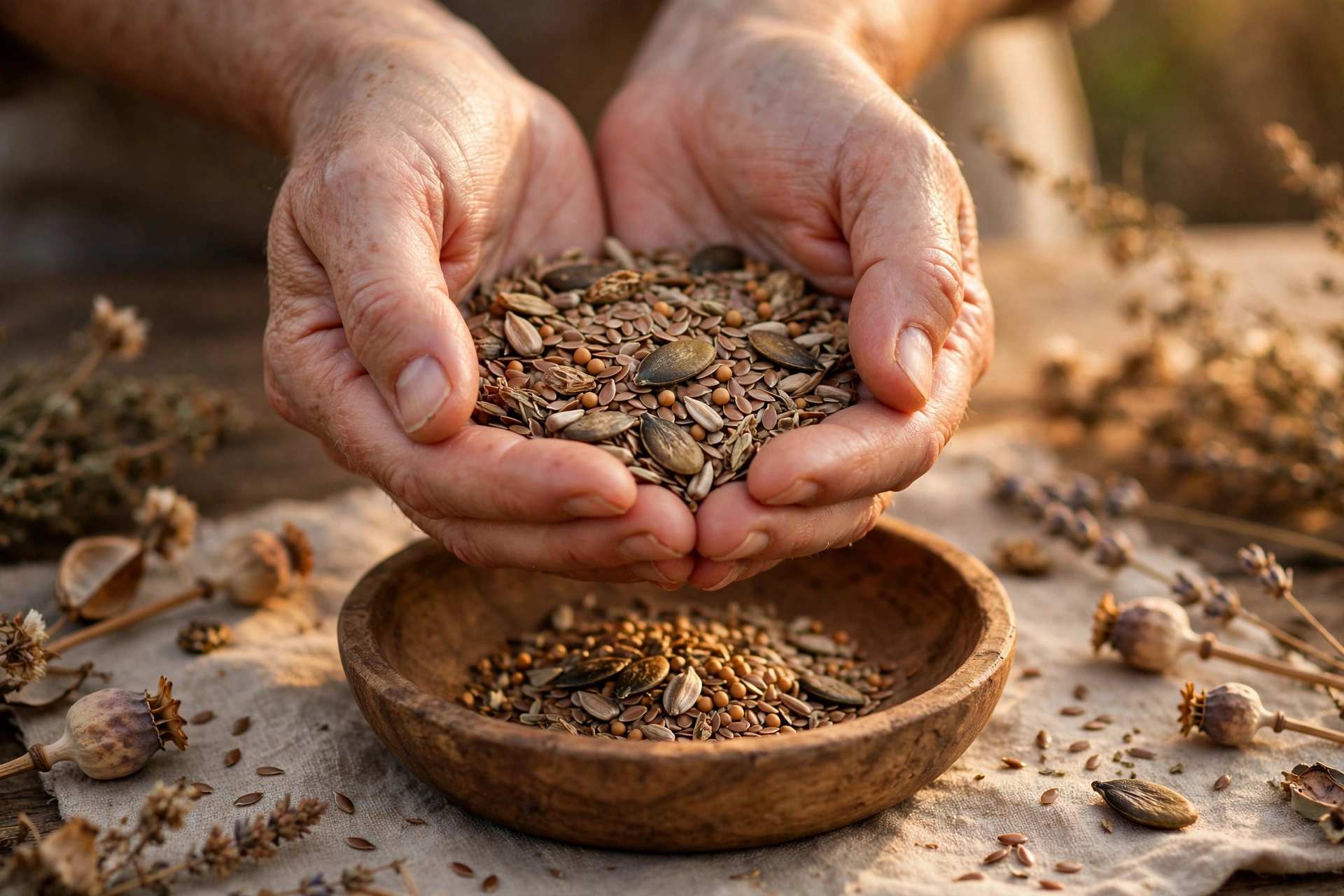
The skill that turns a gardener into a seed keeper — and the oldest agricultural technology there is. Why save seed? Three reasons: it adapts varieties to your soil and seasons (local adaptation is real and compounds yearly); it preserves varieties the market drops; and it costs nothing. A gardener who saves seed is never fully dependent on a catalog again.
Start with the easy ones
Year one is for confidence. These four practically save themselves.
Easiest
Beans & peas
Let the pods dry on the vine, shell, store. Self-pollinating, generous, and nearly foolproof — the perfect first save.
Easy
Lettuce
Let a plant bolt, watch the fluffy seed heads form, shake them into a bag. One plant makes more seed than you’ll use in years.
Easy, one extra step
Tomatoes
Scoop, ferment, rinse, dry — the fermentation step removes the germination-inhibiting coating. Worth learning; it’s the gateway skill.
Ferment the tomatoes
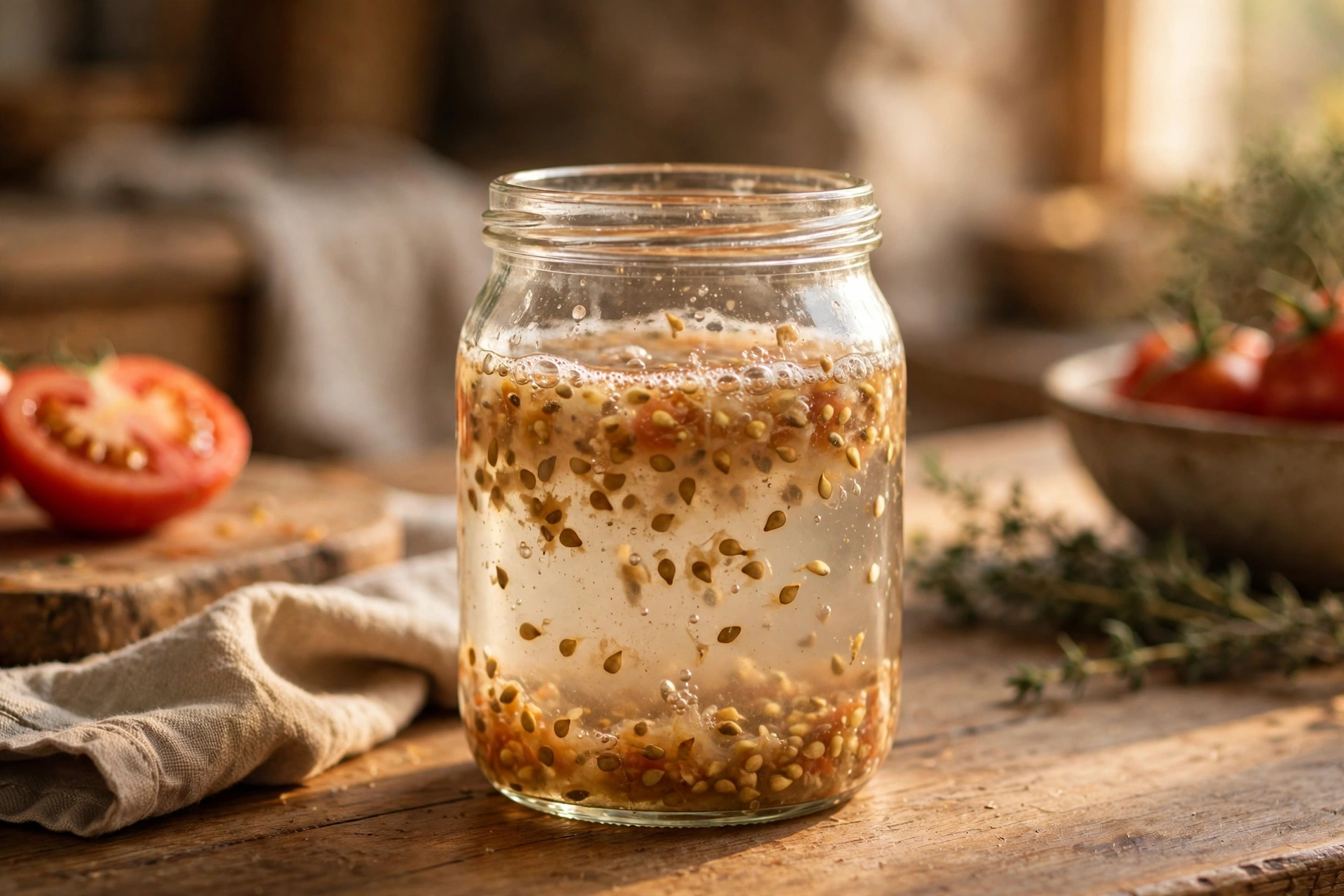
Scoop seeds into a jar with a little water and let them ferment two to three days, until a film forms on top. Rinse clean, then dry on a paper plate — not a paper towel, they stick — until fully dry. The fermentation step matters: it breaks down the coating that inhibits germination and separates out the duds, which float. Skip it and you’ll still get seedlings; do it and you’ll get better ones.
Harvest, dry, store
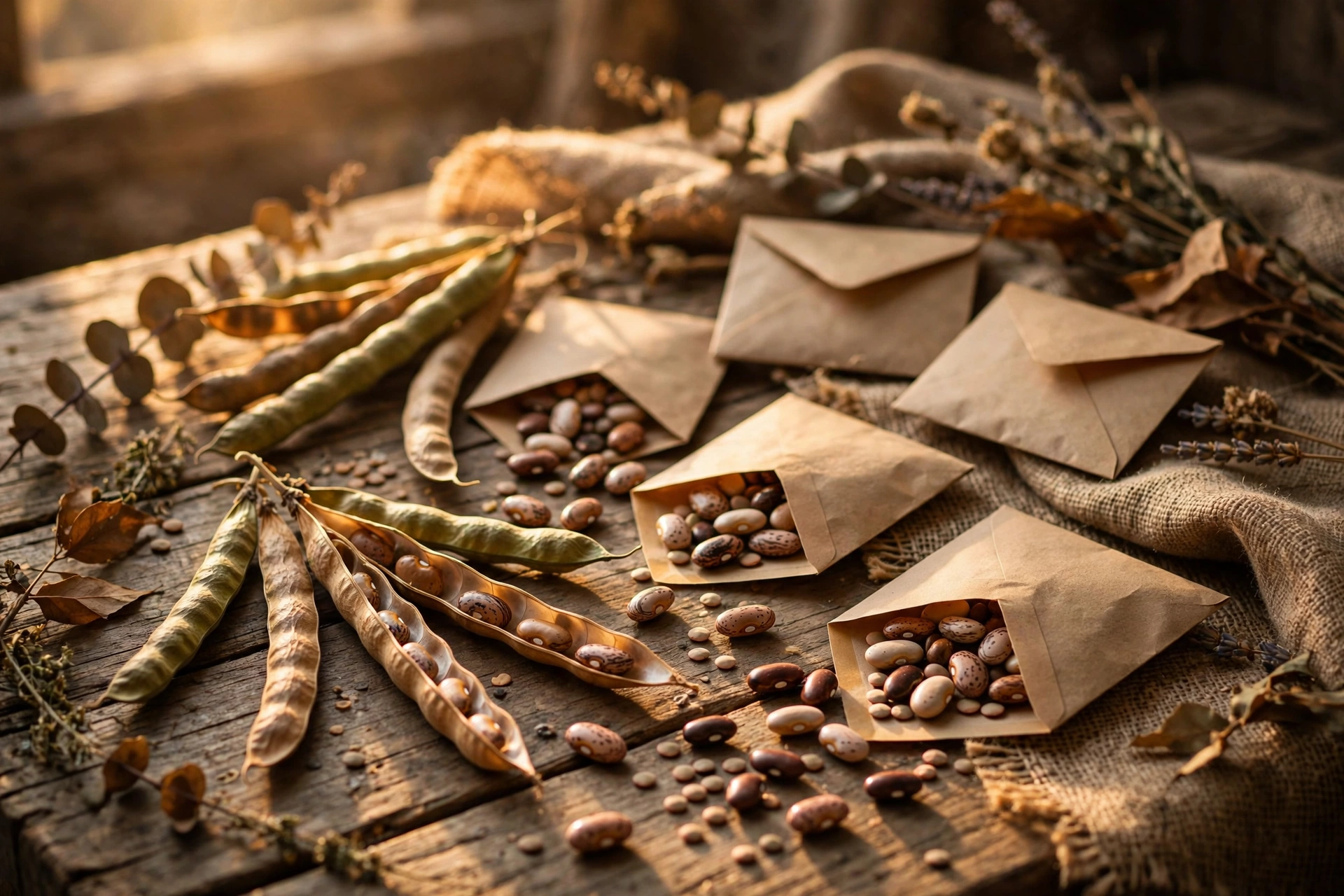
Harvest dry: pods that rattle, heads that crumble. Dry further on screens in moving air — seed that feels dry often isn’t. Store cool, dark, and dry in labeled envelopes or sealed jars, variety and year on every label. The full storage playbook lives on the seed saving & storage shelf.
Year two: the cross-pollinators
Squash, corn, and their rowdy cousins need isolation or hand-pollination to stay true — that’s a second-year skill, and a good one to learn from your local extension service or a seed-saving handbook. Master the easy four first; the garden will still be there.
Good to know
Can I save seeds from hybrids?
They won’t grow true — the next generation is unpredictable. Save from open-pollinated varieties only, which is why the heirloom shelf and this guide go together.
How do I know seed is dry enough to store?
Beans and peas should be hard enough to shatter rather than dent. When in doubt, give it another few days on the screen — storing damp seed is the most common way a good save goes bad.
Do I need special equipment to start?
No. Jars, paper plates, envelopes, and a pen cover year one. The craft is knowledge, not gear — save the equipment budget for the seed-starting shelf.
Some links are affiliate links — we may earn a commission at no extra cost to you.